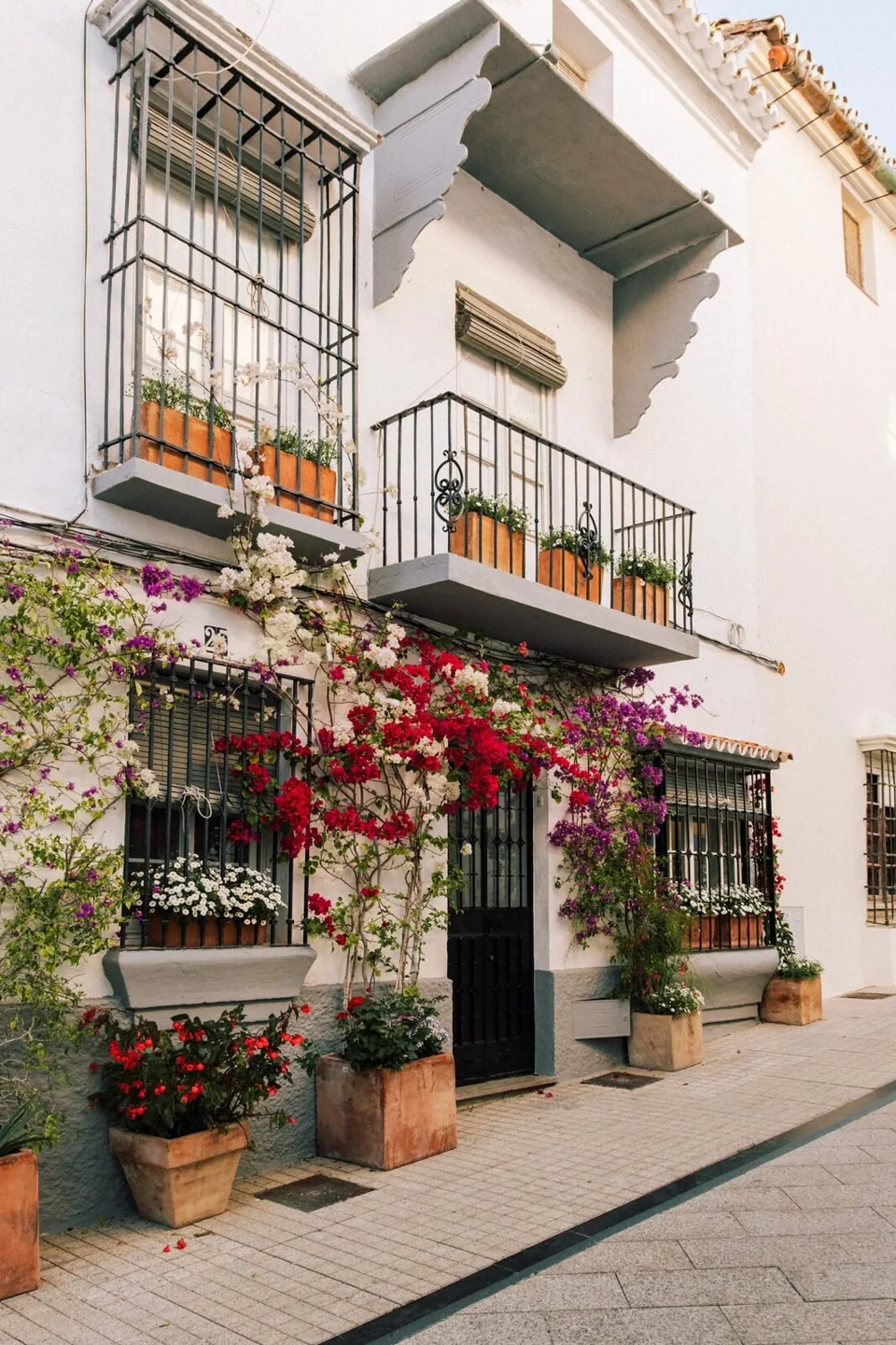
Where is Marbella Old Town?
Marbella Old Town is the historic centre just inland from Alameda Park and Avenida del Mar. It is a good place to begin if you want to understand the town beyond its beach clubs and hotels. The streets are best experienced on foot: a square opens out, a lane narrows, and there is often something worth noticing above eye level.
Puerto Banús is a separate part of Marbella. If you are staying there, plan your journey to central Marbella before setting off. The Old Town, Marbella’s central seafront and Alameda Park fit naturally into the same visit.
What to see in the Old Town
Plaza de los Naranjos
Orange Square is the obvious starting point, with orange trees, terraces and historic façades around a central fountain. It is worth pausing here before exploring the smaller streets around it. Take time to look at the buildings, rather than treating the square only as a place for coffee.
Historic lanes and the old walls
The whitewashed streets and surviving stretches of the old fortifications tell different parts of Marbella’s story. A guide can connect those details and explain how the town developed. If you are walking independently, leave room to wander instead of trying to follow the shortest line between sights.
La Encarnación and the surrounding streets
The church of Nuestra Señora de la Encarnación is another useful landmark. Enjoy its exterior and the streets nearby. Interior access can depend on services and opening arrangements, so do not build a tight itinerary around going inside.
Alameda Park
The park sits between the Old Town and the route towards the seafront. Its fountain and trees make it an easy meeting landmark. Our group walk starts beside the Fuente Virgen del Rocío.
How much time should you allow?
Allow around two hours for an introduction with a guide. Add time for lunch, a café stop or exploring on your own afterwards. A half-day gives you more breathing room and time to continue towards the promenade.
The Old Town is compact, but a worthwhile visit is not just about covering distance. The narrow streets, local stories and architectural details reward a slower pace. On a hot day, bring water and leave space in your schedule for a break.
A guided walk or a walk on your own?
Walking independently works well if you want to browse shops and cafés at your own pace. A guided walk adds the local context: what you are looking at, why it matters and how it fits into the town people live in today.
Our Marbella walking tour in English is a shared experience for up to 15 guests. At €25 per person, it includes professional local guiding and a short extra virgin olive oil tasting, subject to availability. Check the booking listing for the itinerary and conditions for your date.
Practical tips before you arrive
- Wear comfortable shoes for paved lanes and uneven surfaces.
- Bring water and sun protection for outdoor stops.
- Allow extra time for transport and parking, especially if you are arriving from another resort.
- If you have mobility needs, contact us before booking so we can discuss the route.
- When visiting a working church or residential street, respect services, entrances and the people who live there.
For our tour, arrive at the Alameda Park meeting point 10 minutes before your confirmed starting time. Transfers and hotel pickup are not included.
Continue towards the sea
After the Old Town, walk back towards Alameda Park and Avenida del Mar, then continue to Marbella’s central seafront. It is a straightforward way to combine the historic centre with time by the Mediterranean without trying to fit the entire Costa del Sol into one afternoon.
For a fuller plan with time for lunch and a relaxed finish, see our one-day Marbella itinerary.
PUT THE STREETS IN CONTEXT
Walk with someone
who knows the town.
Join our English Marbella Old Town walking tour, with a local guide, up to 15 guests and a small olive oil tasting, subject to availability.